

Advanced Minimally Invasive Treatment for Brain Aneurysms
Protect Your Brain Without Open Surgery
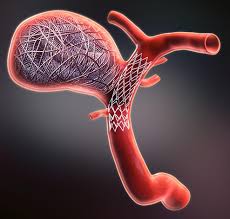
A brain aneurysm is a weakened area in a blood vessel of the brain that balloons outward and can potentially rupture, causing life-threatening bleeding. Brain Aneurysm Coiling is a highly advanced, minimally invasive procedure that seals the aneurysm from within, reducing the risk of rupture while preserving normal blood flow.
Our expert neuro-interventional specialists use cutting-edge imaging technology and catheter-based techniques to provide safe, effective, and precise treatment with faster recovery and fewer complications compared to traditional open brain surgery.
What Is a Brain Aneurysm?
A brain aneurysm occurs when a weak section of a blood vessel wall bulges outward like a balloon. While some aneurysms remain stable, others may rupture unexpectedly, leading to a hemorrhagic stroke and serious neurological complications.
Common Symptoms of a Brain Aneurysm
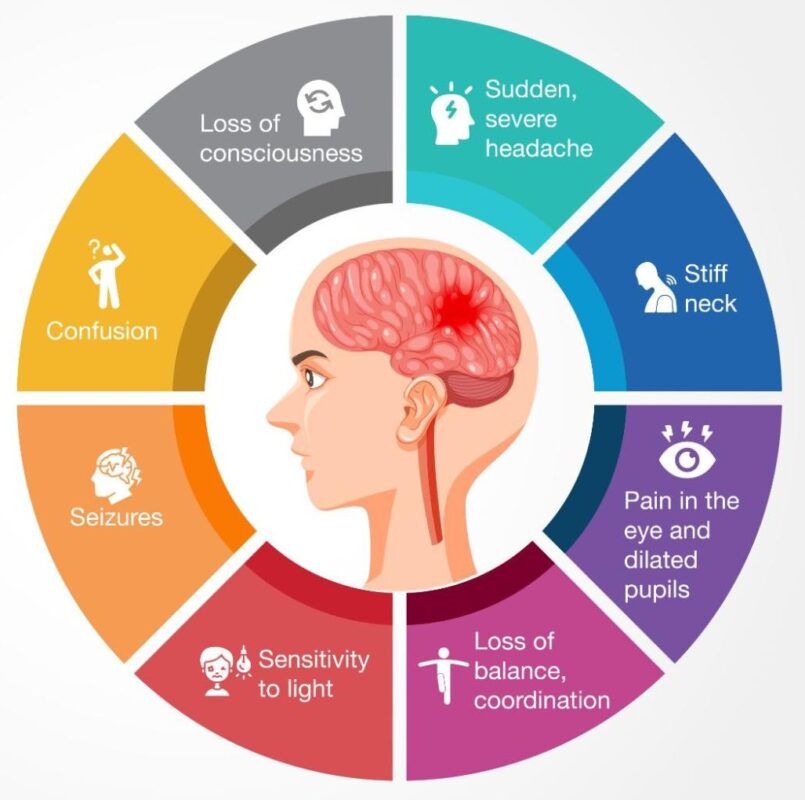
- Sudden severe headache
- Blurred or double vision
- Pain behind the eye
- Dizziness
- Nausea and vomiting
- Difficulty speaking
- Facial numbness or weakness
- Seizures
- Loss of consciousness (in ruptured aneurysms)
What Is Brain Aneurysm Coiling?
Brain Aneurysm Coiling, also known as Endovascular Coiling, is a minimally invasive procedure used to treat aneurysms without opening the skull.
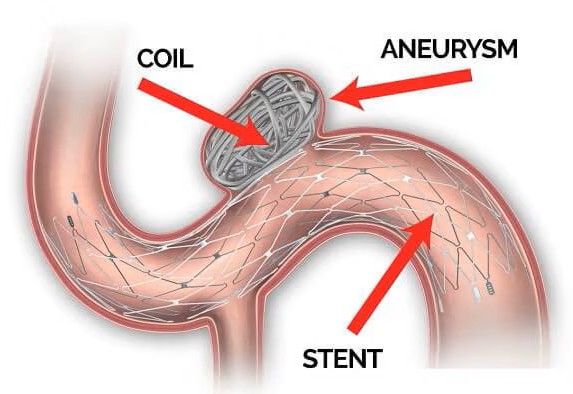
During the procedure, a tiny catheter is inserted through an artery in the wrist or groin and carefully guided to the aneurysm. Soft platinum coils are then placed inside the aneurysm, causing it to clot and preventing blood from entering the weakened area.
This effectively reduces the risk of rupture while maintaining normal blood flow through the surrounding vessels.
How the Procedure Works
Step 1: Vascular Access
A small catheter is inserted through an artery in the wrist or groin.
Step 2: Navigation
Using real-time imaging guidance, the catheter is directed to the aneurysm inside the brain.
Step 3: Coil Placement
Specialized platinum coils are deployed into the aneurysm sac.
Step 4: Aneurysm Sealing
The coils promote clot formation, sealing the aneurysm from circulation.
Step 5: Recovery
The catheter is removed, and patients are monitored before discharge.
Benefits of Brain Aneurysm Coiling
Minimally Invasive Approach
No large surgical incision or opening of the skull.
Reduced Risk of Rupture
Effectively isolates the aneurysm from blood circulation.
Faster Recovery
Most patients recover significantly faster than with open surgery.
Shorter Hospital Stay
Many patients can return home within a few days.
Less Pain and Scarring
Only a tiny puncture site is required.
High Precision Treatment
Advanced imaging allows accurate targeting of the aneurysm.
Who Is a Candidate for Brain Aneurysm Coiling?
- Unruptured brain aneurysms
- Recently ruptured aneurysms
- Wide-neck aneurysms (with stent assistance)
- High surgical risk for open brain surgery
- Multiple aneurysms requiring treatment
Conditions Treated
- Saccular (Berry) Aneurysms
- Ruptured Brain Aneurysms
- Unruptured Brain Aneurysms
- Wide-Neck Aneurysms
- Complex Intracranial Aneurysms
- Recurrent Aneurysms
Why Choose Minimally Invasive Aneurysm Treatment?
Traditional surgical clipping requires opening the skull and accessing the brain directly. Endovascular coiling provides a safer alternative for many patients by treating the aneurysm from inside the blood vessel.
Advantages Over Open Surgery
✔ No craniotomy (skull opening)
✔ Smaller incision
✔ Reduced complications
✔ Faster recovery
✔ Shorter hospitalization
✔ Earlier return to daily activities
Recovery After Coiling
Recovery time varies depending on the size and location of the aneurysm and whether it has ruptured.
Most patients experience
- Minimal post-procedure discomfort
- Early mobilization
- Short hospital stay
- Quick return to normal activities
- Regular follow-up imaging for long-term monitoring
Why Choose Our Neuro-Interventional Team?
Expertise in advanced neurovascular interventions.
High-resolution angiography and image-guided treatment systems.
Individualized treatment planning for every patient.
Diagnosis, treatment, recovery, and long-term follow-up under one roof.
Focused on achieving the best outcomes with the least disruption to your life.
Frequently Asked Questions
Yes. Brain aneurysm coiling is a well-established procedure with excellent success rates when performed by experienced specialists.
Most procedures take between 1–3 hours depending on aneurysm complexity.
Many aneurysms can be fully treated with coiling alone. Some cases may require stent-assisted techniques.
The procedure is performed under anesthesia, and patients typically experience minimal discomfort afterward.
Follow-up imaging is important because some aneurysms may require monitoring or additional treatment over time.