

Advanced Minimally Invasive Treatment to Prevent Stroke
Restoring Blood Flow to the Brain Without Major Surgery
The carotid arteries are the major blood vessels that supply oxygen-rich blood to the brain. When these arteries become narrowed due to plaque buildup, the risk of stroke significantly increases.
Carotid Artery Stenting (CAS) is a minimally invasive procedure that opens blocked or narrowed carotid arteries and restores healthy blood flow to the brain. This advanced treatment helps reduce the risk of stroke while avoiding the need for open surgical intervention in many patients.
What Is Carotid Artery Disease?
Carotid artery disease occurs when fatty deposits, known as plaque, accumulate inside the carotid arteries located on either side of the neck.
As plaque builds up, the arteries become narrowed (stenosis), reducing blood flow to the brain and increasing the risk of stroke or transient ischemic attacks (TIAs), commonly called “mini-strokes.”
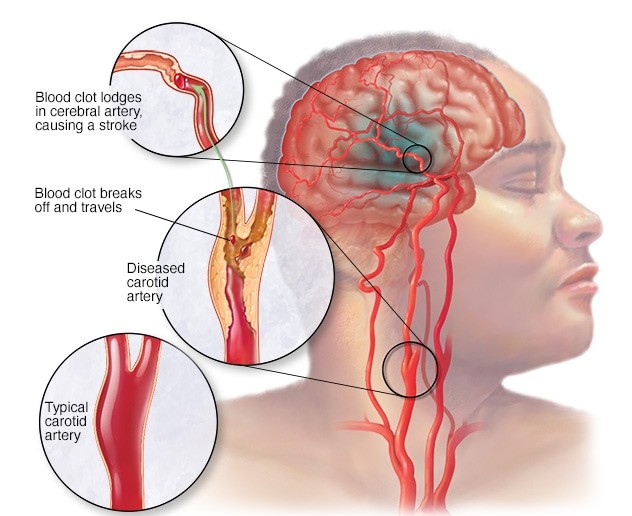
Causes of Carotid Artery Disease
- High blood pressure
- Diabetes
- High cholesterol
- Smoking
- Obesity
- Family history of vascular disease
- Sedentary lifestyle
Symptoms of Carotid Artery Stenosis
- Sudden weakness or numbness on one side of the body
- Difficulty speaking or understanding speech
- Sudden vision loss in one eye
- Dizziness or loss of balance
- Facial drooping
- Transient Ischemic Attack (TIA)
- Stroke symptoms
What Is Carotid Artery Stenting?
Carotid artery disease occurs when fatty deposits, known as plaque, accumulate inside the carotid arteries located on either side of the neck.
As plaque builds up, the arteries become narrowed (stenosis), reducing blood flow to the brain and increasing the risk of stroke or transient ischemic attacks (TIAs), commonly called “mini-strokes.”
How Does Carotid Artery Stenting Work?
The procedure involves:
Opening the Narrowed Artery
A balloon may be used to widen the narrowed segment.
Stent Placement
A self-expanding stent is deployed within the artery to maintain blood flow.
Stroke Protection
Special embolic protection devices are often used during the procedure to capture any debris and prevent it from traveling to the brain.
How Is Carotid Artery Stenting Performed?
Step 1: Pre-Procedure Evaluation
The specialist reviews : Carotid Doppler Ultrasound, CT Angiography (CTA), MR Angiography (MRA), Medical history and risk factors
Step 2: Local Anesthesia
The procedure is typically performed under local anesthesia with mild sedation.
Step 3: Catheter Insertion
A small catheter is inserted through an artery in the groin or wrist.
Step 4: Navigation to the Carotid Artery
Using real-time imaging guidance, the catheter is advanced to the narrowed carotid artery.
Step 5: Embolic Protection Device Placement
A protection filter may be positioned beyond the blockage to capture plaque debris during treatment.
Step 6: Balloon Angioplasty and Stent Placement
The narrowed artery is widened, and a stent is deployed to restore normal blood flow.
Step 7: Recovery
The catheter is removed, and the patient is monitored before discharge. Most patients are discharged within 24–48 hours.
Benefits of Carotid Artery Stenting
Stroke Prevention
Significantly reduces the risk of future strokes caused by carotid artery narrowing.
Minimally Invasive
No large neck incision or open surgery.
Faster Recovery
Shorter recovery period compared to traditional carotid surgery.
Short Hospital Stay
Most patients return home within one or two days.
Improved Blood Flow
Restores circulation to the brain.
Suitable for High-Risk Surgical Patients
An excellent option for individuals who may not be ideal candidates for open surgery.
Who Is a Candidate for Carotid Artery Stenting?
- Significant carotid artery narrowing
- Previous TIA or stroke
- High-grade carotid stenosis
- Recurrent narrowing after previous surgery
- Medical conditions that increase surgical risk
- Symptomatic carotid artery disease
Expected Results
✔ Improved blood flow to the brain
✔ Reduced stroke risk
✔ Improved vascular health
✔ Faster recovery compared to open surgery
✔ Enhanced quality of life
Conditions Treated
- Carotid Artery Stenosis
- Symptomatic Carotid Disease
- Transient Ischemic Attack (TIA)
- Stroke Prevention
- High-Risk Vascular Disease
Recovery After Carotid Artery Stenting
- Take prescribed blood-thinning medications
- Control blood pressure and cholesterol
- Stop smoking
- Follow a heart-healthy diet
- Attend scheduled follow-up visits
Why Choose Our Neurovascular & Interventional Team?
Highly experienced physicians specializing in stroke prevention and carotid interventions.
State-of-the-art angiography and vascular imaging systems for precision treatment.
Early diagnosis, treatment, and long-term follow-up under one roof.
Advanced catheter-based therapies with proven outcomes.
Customized treatment plans based on each patient's vascular condition and risk profile.
Frequently Asked Questions
Both carotid artery stenting and carotid endarterectomy are effective treatments. The best option depends on the patient's anatomy, symptoms, and overall health.
Most carotid artery stenting procedures take approximately 1–2 hours.
Yes. The procedure is usually performed under local anesthesia with mild sedation.
Most patients resume routine activities within a few days after treatment.
No. Many patients have significant narrowing without symptoms, which is why screening may be recommended for high-risk individuals.