

Advanced Non-Surgical Treatment for Chronic Knee Pain
Relief from Knee Osteoarthritis Without Knee Replacement Surgery
Knee osteoarthritis is one of the most common causes of chronic knee pain, affecting millions of people worldwide. It occurs when the cartilage within the knee joint gradually wears down, leading to pain, stiffness, swelling, and reduced mobility.
Geniculate Artery Embolization (GAE) is an innovative, minimally invasive treatment that targets the abnormal blood vessels responsible for inflammation and pain in knee osteoarthritis. By reducing inflammation within the knee joint, GAE can significantly relieve pain, improve mobility, and delay or even avoid the need for knee replacement surgery in selected patients.
What Is Knee Osteoarthritis?
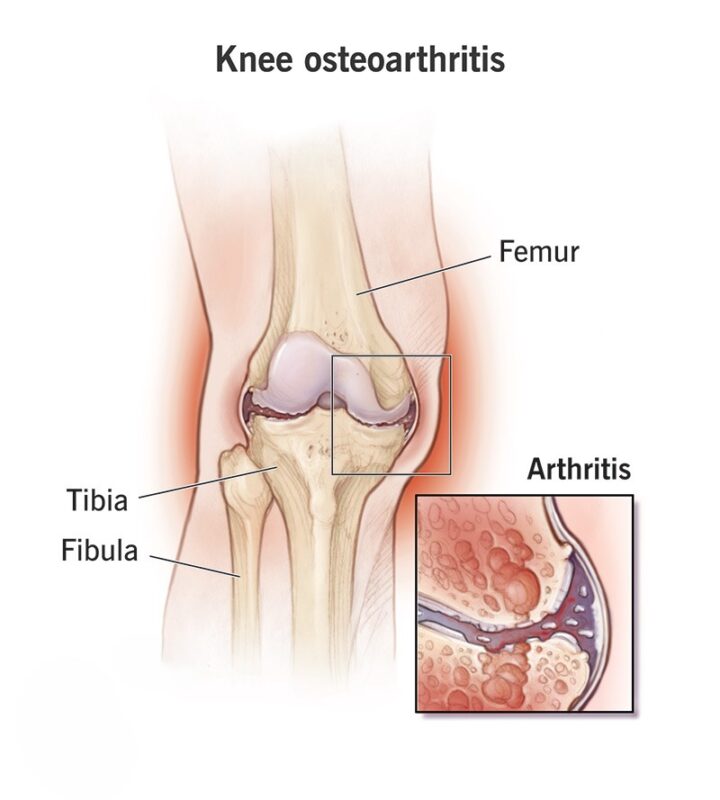
Knee osteoarthritis is a degenerative joint condition in which the protective cartilage covering the ends of the bones gradually breaks down. As the cartilage wears away, the bones may rub against each other, causing pain, inflammation, stiffness, and difficulty with movement.
Common Symptoms of Knee Osteoarthritis
- Chronic knee pain
- Knee stiffness
- Swelling around the knee
- Difficulty walking
- Pain while climbing stairs
- Reduced range of motion
- Joint tenderness
- Knee weakness
- Clicking or grinding sensations
- Difficulty performing daily activities
Symptoms often worsen over time if left untreated.
What Is Geniculate Artery Embolization (GAE)?
Geniculate Artery Embolization is a minimally invasive image-guided procedure performed by an interventional radiologist to reduce chronic knee pain caused by osteoarthritis.
Research has shown that osteoarthritic knees often develop abnormal blood vessels and inflammation around the joint lining. These abnormal vessels contribute to persistent pain and inflammation.
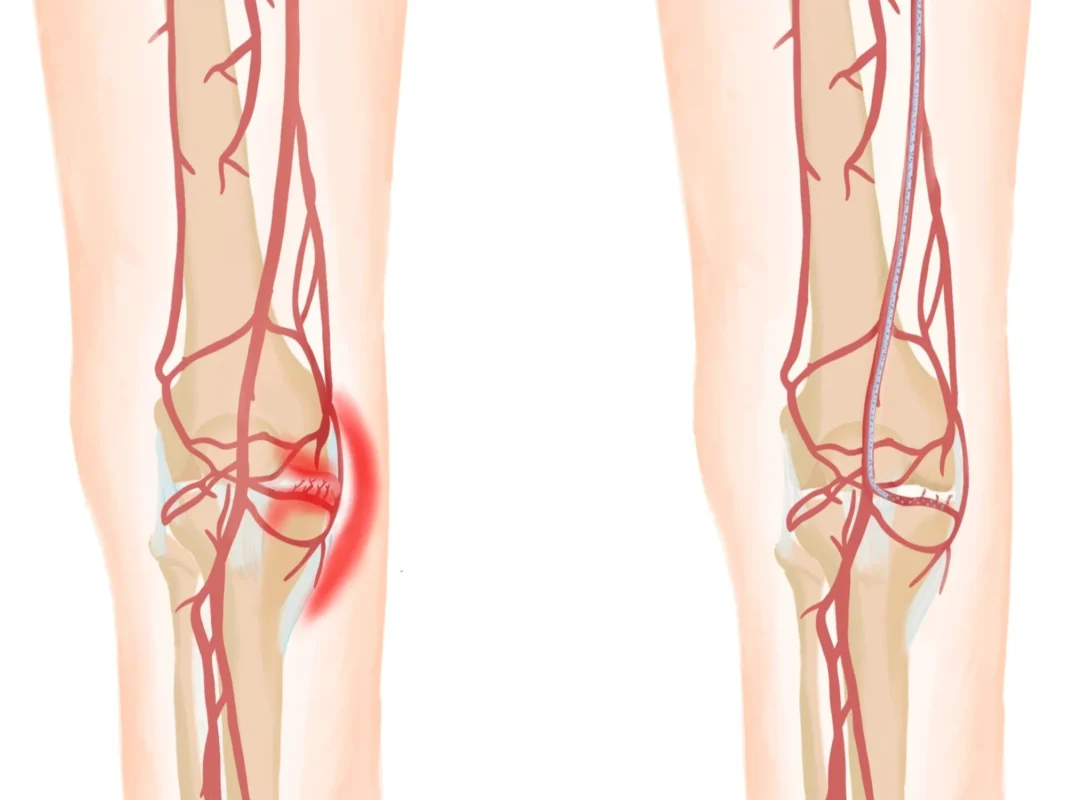
GAE works by selectively blocking these tiny abnormal blood vessels, reducing inflammation and interrupting pain signals within the knee.
How Does GAE Work?
The procedure targets the geniculate arteries, which supply blood to the tissues around the knee joint.
During embolization:
- Abnormal inflamed blood vessels are identified
- Tiny embolic particles are injected into selected vessels
- Excess blood flow associated with inflammation is reduced
- Pain-producing inflammatory activity decreases
- Knee function gradually improves
Who Can Benefit from GAE?
Geniculate Artery Embolization may be suitable for patients who:
- Have mild to moderate knee osteoarthritis
- Experience chronic knee pain despite medications
- Have persistent symptoms despite physiotherapy
- Are not ready for knee replacement surgery
- Are poor surgical candidates due to medical conditions
- Wish to avoid or delay joint replacement surgery
- Have ongoing knee pain affecting quality of life
A detailed clinical and imaging assessment is performed before treatment.
Recovery After GAE
Patients may experience:
- Mild soreness at the catheter insertion site
- Temporary knee discomfort
- Minor bruising
Most individuals:
✔ Walk immediately after the procedure
✔ Return to normal activities within a few days
✔ Notice gradual improvement over weeks to months
How Is Geniculate Artery Embolization Performed?
Step 1: Evaluation
The specialist reviews: X-rays of the knee, MRI Scan (if required), Previous treatments, Clinical examination findings
Step 2: Local Anesthesia
The procedure is usually performed under local anesthesia.
Step 3: Arterial Access
A tiny catheter is inserted through an artery in the wrist or groin.
Step 4: Angiographic Mapping
Advanced imaging identifies the abnormal geniculate arteries responsible for inflammation.
Step 5: Embolization
Microscopic particles are delivered into the targeted vessels to reduce abnormal blood flow and inflammation.
Step 6: Recovery
The catheter is removed, and the patient is observed before discharge.
Most patients return home the same day.
Benefits of Geniculate Artery Embolization
Minimally Invasive
No surgical incision or joint replacement required.
Effective Pain Relief
Targets the source of inflammation associated with osteoarthritis.
Same-Day Procedure
Most patients are discharged within a few hours.
Faster Recovery
Quick return to normal daily activities.
Preserves the Knee Joint
No removal or replacement of the joint.
Reduced Dependence on Pain Medications
May decrease the need for long-term painkillers.
Delays Knee Replacement Surgery
Can be an excellent option for patients seeking alternatives to surgery.
Why Choose Our Interventional Radiology Team?
Experienced interventional radiologists specializing in minimally invasive treatments for musculoskeletal conditions.
Advanced angiography systems for precise targeting of abnormal blood vessels.
Customized care tailored to each patient's symptoms and lifestyle goals.
Modern treatment options designed to maximize relief while minimizing recovery time.
Collaboration with orthopedic surgeons, physiotherapists, pain specialists, and rehabilitation experts.
Frequently Asked Questions
No. GAE is a minimally invasive catheter-based procedure performed through a tiny puncture in an artery.
The procedure is usually performed under local anesthesia and is generally well tolerated.
Most procedures take approximately 1–2 hours.
Some patients notice improvement within a few weeks, while others experience gradual benefits over several months.
GAE is not a replacement for knee replacement in advanced cases, but it may help delay or avoid surgery in appropriately selected patients.