

Advanced Targeted Treatment for Liver Cancer
Delivering Chemotherapy Directly to the Tumor While Preserving Healthy Liver Tissue
Liver cancer is one of the most challenging cancers to treat, especially when surgery is not possible. Transarterial Chemoembolization (TACE) is an advanced, minimally invasive treatment that combines targeted chemotherapy with embolization to attack liver tumors directly while minimizing the impact on the rest of the body.
TACE is widely used for patients with primary liver cancer and selected liver metastases, helping to control tumor growth, improve survival, and enhance quality of life.
What Is TACE?
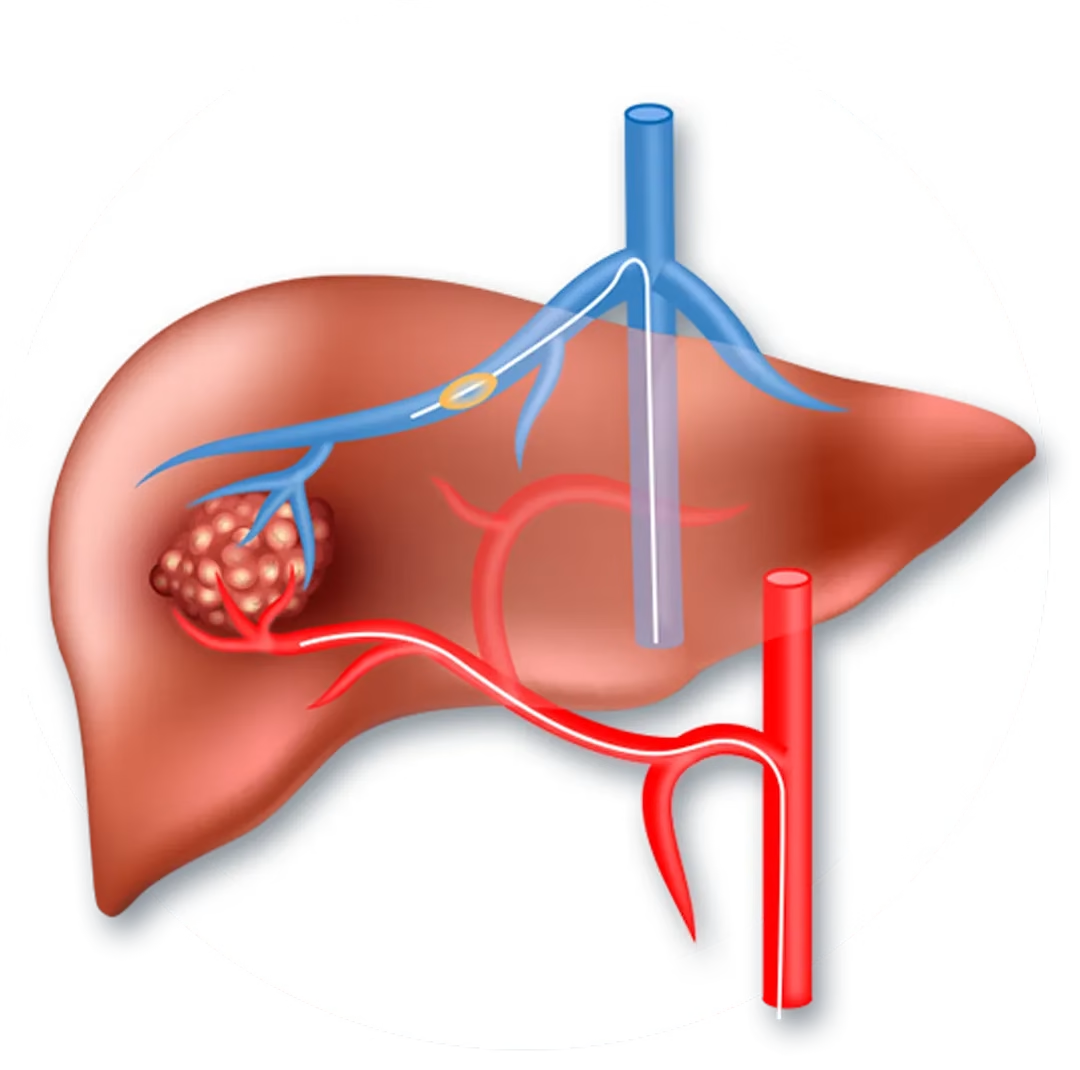
Transarterial Chemoembolization (TACE) is a specialized interventional radiology procedure that delivers high concentrations of chemotherapy directly into the blood vessels feeding a liver tumor.
After delivering the chemotherapy, tiny embolic particles are injected to block the tumor’s blood supply. This dual action helps:
- Deliver powerful chemotherapy directly to the cancer
- Trap the chemotherapy within the tumor
- Cut off the tumor’s blood supply
- Slow or stop tumor growth
- Preserve healthy liver tissue
Because the treatment is targeted, fewer chemotherapy drugs circulate throughout the body compared to traditional systemic chemotherapy.
What Is Liver Cancer?
Liver cancer occurs when abnormal cells grow uncontrollably within the liver.
Common Types of Liver Cancer Treated with TACE
- Hepatocellular Carcinoma (HCC)
- Intermediate-stage Liver Cancer
- Unresectable Liver Tumors
- Selected Liver Metastases from other cancers
Symptoms of Liver Cancer
- Abdominal pain
- Unexplained weight loss
- Fatigue
- Abdominal swelling
- Jaundice
- Nausea
- Enlarged liver
How Does TACE Work?
Liver tumors receive most of their blood supply from the hepatic artery, whereas healthy liver tissue receives blood from multiple sources.
TACE takes advantage of this difference by:
Step 1: Targeted Chemotherapy
Chemotherapy medication is delivered directly into the artery feeding the tumor.
Step 2: Embolization
Special embolic particles are injected to block blood flow to the tumor.
Result
- Tumor cells are exposed to concentrated chemotherapy
- Oxygen supply is reduced
- Tumor growth is slowed or stopped
- Healthy liver tissue is largely preserved
How Is TACE Performed?
Step 1: Pre-Treatment Evaluation
The specialist evaluates: CT Scan, MRI Scan, Liver Function Tests, Tumor Markers, Overall Health Status
Step 2: Local Anesthesia
The procedure is typically performed under local anesthesia with sedation.
Step 3: Catheter Placement
A tiny catheter is inserted through an artery in the wrist or groin and guided to the hepatic artery.
Step 4: Tumor Mapping
Contrast imaging identifies the arteries supplying the tumor.
Step 5: Chemotherapy Delivery
The chemotherapy medication is infused directly into the tumor-feeding vessels.
Step 6: Embolization
Microscopic particles are injected to block the blood supply and retain the chemotherapy within the tumor.
Step 7: Recovery
The catheter is removed, and the patient is monitored before discharge.
Most patients stay in the hospital for 1–2 days.
Benefits of TACE
Targeted Cancer Treatment
Delivers chemotherapy directly to the tumor.
Higher Local Drug Concentration
More effective tumor exposure compared to systemic chemotherapy.
Preserves Healthy Liver Tissue
Healthy liver receives minimal treatment exposure.
Minimally Invasive
No major surgery or large incisions.
Improves Tumor Control
Helps slow progression and shrink tumors.
Can Be Repeated
Additional sessions can be performed if necessary.
Bridge to Liver Transplant
May help control cancer while waiting for transplantation.
Who Is a Candidate for TACE?
- Hepatocellular Carcinoma (HCC)
- Intermediate-stage liver cancer
- Multiple liver tumors
- Unresectable liver cancer
- Liver tumors not suitable for ablation
- Patients awaiting liver transplantation
- Selected metastatic liver tumors
Expected Results
✔ Slower tumor progression
✔ Tumor shrinkage
✔ Improved disease control
✔ Preservation of healthy liver function
✔ Extended treatment options
✔ Improved quality of life
Conditions Treated
- Hepatocellular Carcinoma (HCC)
- Intermediate-Stage Liver Cancer
- Unresectable Liver Tumors
- Liver-Dominant Metastatic Disease
- Recurrent Liver Cancer
Recovery After TACE
- Mild abdominal discomfort
- Fatigue
- Nausea
- Low-grade fever
- Temporary loss of appetite
Why Choose Our Interventional Oncology Team?
Expert interventional radiologists with extensive experience in liver-directed therapies.
State-of-the-art angiography systems for precise tumor targeting.
Close collaboration with oncologists, hepatologists, liver surgeons, and transplant teams.
Customized treatment strategies based on tumor characteristics and liver function.
Access to TACE, TARE, Ablation, Biopsy, and advanced cancer treatments under one roof.
Frequently Asked Questions
TACE combines chemotherapy with embolization, allowing the chemotherapy to be delivered directly to the tumor while limiting exposure to the rest of the body.
The procedure itself is generally well tolerated. Some patients experience temporary discomfort afterward, which is managed with medication.
The number of sessions depends on the size, location, and number of tumors, as well as the patient's response to treatment.
For some patients, TACE provides excellent tumor control. It is often used to slow disease progression, reduce tumor size, or bridge patients to transplantation.
Most TACE procedures take approximately 1–3 hours.