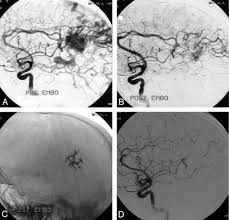

Advanced Minimally Invasive Treatment for Brain Arteriovenous Malformations (AVMs)
Advanced Minimally Invasive Treatment for Brain Arteriovenous Malformations (AVMs)
A Brain Arteriovenous Malformation (AVM) is a rare but potentially serious condition in which arteries and veins are abnormally connected, disrupting normal blood flow within the brain. AVMs can increase the risk of brain hemorrhage, seizures, headaches, and neurological complications.
Brain AVM Embolization is an advanced minimally invasive Neuro Interventional procedure that blocks the abnormal blood vessels supplying the AVM. This treatment helps reduce the risk of bleeding, control symptoms, and may be used as a standalone treatment or in combination with surgery or radiosurgery.
What Is a Brain AVM?
A Brain Arteriovenous Malformation (AVM) is an abnormal tangle of blood vessels where arteries connect directly to veins without the normal network of tiny capillaries.This abnormal connection creates high-pressure blood flow that can weaken blood vessel walls and increase the risk of rupture and bleeding within the brain.
Why Is a Brain AVM Dangerous?
Because AVMs bypass normal circulation, they may cause:
- Brain hemorrhage (bleeding)
- Stroke-like symptoms
- Seizures
- Chronic headaches
- Neurological deficits
- Cognitive or memory problems
- Weakness or numbness
- Vision disturbances
A ruptured AVM can become a life-threatening medical emergency requiring immediate treatment.
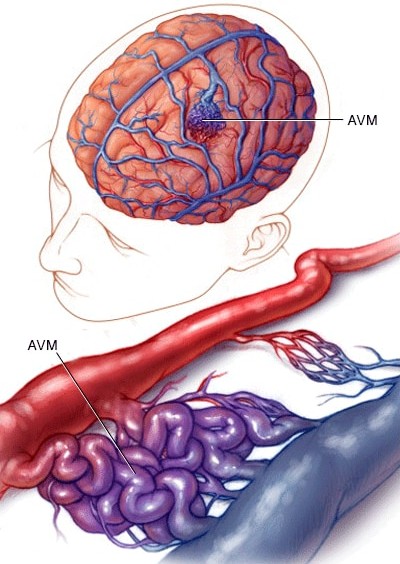
Common Symptoms of Brain AVM
Some AVMs remain silent and are discovered incidentally during imaging studies.
When symptoms occur, they may include:
- Severe headaches
- Seizures
- Sudden weakness of the face, arm, or leg
- Numbness or tingling
- Vision problems
- Difficulty speaking
- Dizziness
- Balance difficulties
- Brain hemorrhage
The symptoms often depend on the size and location of the AVM.
What Is Brain AVM Embolization?
Brain AVM Embolization is a minimally invasive image-guided procedure performed by a Neuro Interventional Radiologist to block the abnormal blood vessels feeding the AVM.Using a tiny catheter, the specialist navigates through the blood vessels to the AVM and injects specialized embolic materials that seal off abnormal blood flow.
The goal is to:
- Reduce blood flow within the AVM
- Lower the risk of bleeding
- Shrink the AVM
- Improve symptoms
- Facilitate surgery or radiosurgery when needed
How Does AVM Embolization Work?
The procedure targets the arteries supplying the AVM.
Special embolic agents such as:
- Liquid embolic materials
- Medical-grade glue
- Onyx® embolic system
- Other advanced embolization agents
are carefully injected into the abnormal vessels.
These materials block blood flow to the AVM while preserving circulation to normal brain tissue.When Is AVM Embolization Recommended?
AVM embolization may be recommended for:
- Brain AVMs at risk of bleeding
- Previously ruptured AVMs
- Symptomatic AVMs
- AVMs causing seizures
- Large AVMs requiring staged treatment
- AVMs planned for surgery
- AVMs planned for radiosurgery
Treatment decisions are individualized based on the size, location, and complexity of the AVM.