

Advanced Minimally Invasive Treatment for Blocked Leg Arteries
Restore Blood Flow, Relieve Leg Pain, and Prevent Limb Loss
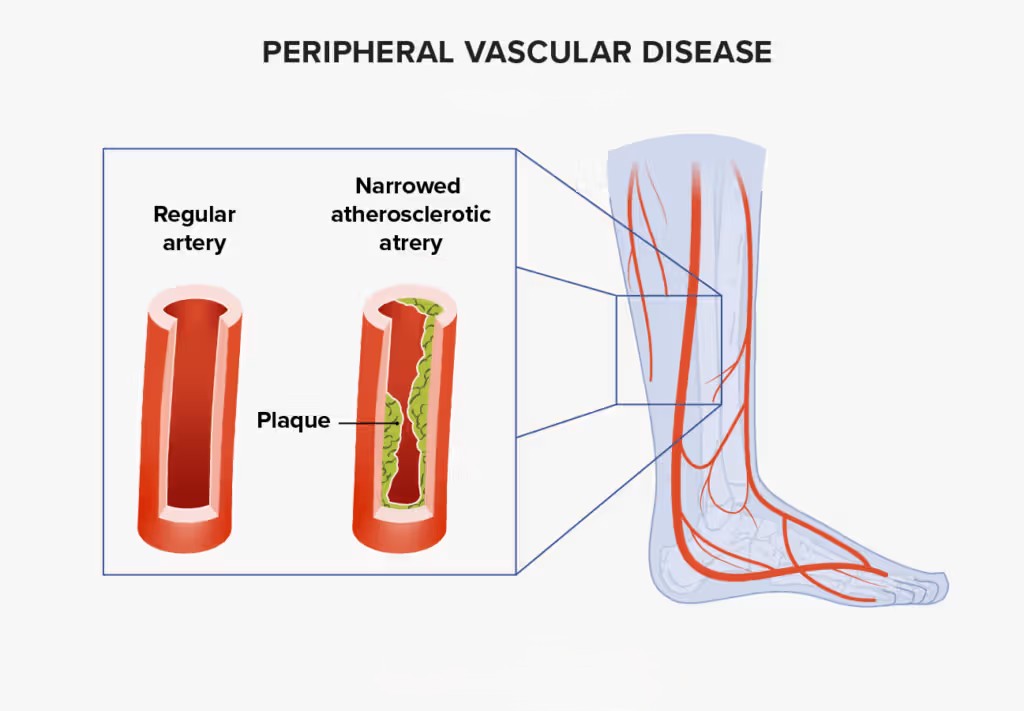
Peripheral Vascular Disease (PVD), also known as Peripheral Artery Disease (PAD), occurs when arteries supplying blood to the legs become narrowed or blocked due to plaque buildup. Reduced blood flow can cause pain while walking, non-healing wounds, foot ulcers, and in severe cases, limb-threatening complications.
Peripheral Vascular Disease Angioplasty is a minimally invasive, image-guided procedure that opens blocked arteries, restores circulation, and improves blood flow to the legs and feet. This advanced treatment helps patients walk comfortably, heal wounds faster, and reduce the risk of amputation.
What Is Peripheral Vascular Disease (PVD)?
Peripheral Vascular Disease is a circulatory disorder caused by narrowing or blockage of the arteries that carry blood to the legs and feet.Over time, fatty deposits (atherosclerosis) accumulate inside the arteries, restricting blood flow and reducing oxygen delivery to muscles and tissues.
Causes of Peripheral Vascular Disease
- Diabetes
- Smoking
- High blood pressure
- High cholesterol
- Obesity
- Kidney disease
- Sedentary lifestyle
- Family history of vascular disease
- Increasing age
Symptoms of Peripheral Vascular Disease
Symptoms may develop gradually and worsen over time.
Common Symptoms Include:
- Leg pain while walking (Claudication)
- Calf pain during exercise
- Leg fatigue
- Cramping in the legs
- Cold feet
- Numbness or weakness in the legs
- Non-healing foot wounds
- Foot ulcers
- Discoloration of the toes
- Rest pain in the feet
- Gangrene in advanced stages
Some patients may have significant arterial blockage without obvious symptoms.
How Does Angioplasty Work?
The goal of angioplasty is to restore circulation to the affected limb.
Balloon Angioplasty
A tiny balloon is positioned inside the blocked artery and inflated to widen the vessel.
Stent Placement (When Required)
A metal mesh stent may be placed to support the artery and prevent re-narrowing.
Advanced Techniques
Depending on the blockage, additional technologies may be used, including:
- Drug-Coated Balloons
- Drug-Eluting Stents
- Atherectomy (Plaque Removal)
- Intravascular Imaging
- Specialized Crossing Devices
What Is Peripheral Vascular Disease Angioplasty?
PVD Angioplasty is a minimally invasive procedure used to open narrowed or blocked arteries in the legs.
Using a tiny catheter and balloon, the interventional specialist restores blood flow through the affected artery. In some cases, a vascular stent may be placed to help keep the artery open.
The procedure is performed without major surgery and usually requires only a small puncture in the skin.
Who Is a Candidate for PVD Angioplasty?
- Peripheral Artery Disease (PAD)
- Leg pain while walking
- Critical Limb Ischemia
- Diabetic foot ulcers
- Non-healing wounds
- Rest pain in the legs or feet
- Arterial blockages in the lower limbs
- Risk of limb loss due to poor circulation
How Is Peripheral Vascular Disease Angioplasty Performed?
Step 1: Vascular Assessment
The specialist reviews: Doppler Ultrasound, CT Angiography, MR Angiography, Diagnostic Angiography, Medical history and symptoms
Step 2: Local Anesthesia
The procedure is typically performed under local anesthesia with mild sedation.
Step 3: Catheter Insertion
A small catheter is inserted through an artery in the groin or wrist.
Step 4: Angiography
Contrast dye is injected to identify the exact location and severity of the blockage.
Step 5: Angioplasty
A balloon catheter is advanced into the narrowed artery and inflated to restore blood flow.
Step 6: Stent Placement (If Needed)
A stent may be placed to keep the artery open and improve long-term results.
Step 7: Recovery
The catheter is removed, and the patient is monitored before discharge. Most patients return home within 24 hours.
Benefits of Peripheral Vascular Disease Angioplasty
Minimally Invasive
No large surgical incision required.
Immediate Improvement in Blood Flow
Restores circulation to the affected leg.
Relief from Leg Pain
Reduces symptoms associated with walking and daily activities.
Limb Salvage
Helps prevent amputation in patients with severe arterial disease.
Faster Wound Healing
Improved blood flow promotes healing of ulcers and foot wounds.
Short Hospital Stay
Most patients are discharged the same day or the following day.
Faster Recovery
Return to routine activities much sooner than with open vascular surgery.